Best Temples in Mexico
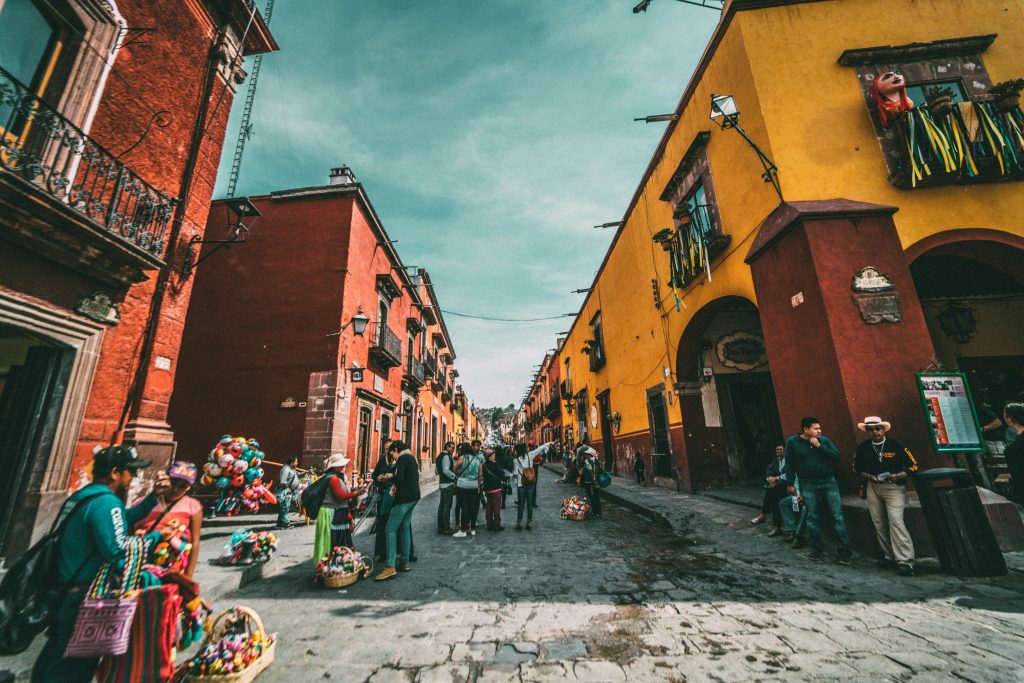
Mexico is not only about beaches, tacos, colonial streets, and colorful markets, but also a country with an incredibly rich “temple culture” — in two different meanings at once. Mexico is often seen as a land of resorts and fiestas, yet it has another strong side: ancient ceremonial centers of the Maya, Aztecs, and Zapotecs, and living Catholic sanctuaries that still shape the rhythm of cities and towns.
In a single trip, you can climb a pyramid at sunrise, walk through a jungle complex where temples hide among the trees, then end the day in front of a grand basilica with candles, choirs, and locals coming not for photos, but for prayer. Here “temples” can be stone platforms and sacred courtyards under the open sky — or baroque cathedrals with gilded altars and centuries of traditions.
Famous Temples in Mexico: What to See First
The most famous in the country
- Teotihuacan (Pyramids of the Sun and the Moon) — the most recognizable ancient temple complex in Mexico.
- Chichén Itzá (Temple of Kukulcán / El Castillo) — the Maya “calling card” in Yucatán.
- Basilica of Our Lady of Guadalupe — the country’s main Catholic shrine.
The most atmospheric
- Palenque — Maya ruins in the jungle: humid air, greenery, stone, and silence.
- Monte Albán — a Zapotec “temple-city” on a plateau with wide-open views (near Oaxaca).
- Mitla — unusual “stone graphics” and patterns; a completely different vibe from classic pyramid-style complexes.
The most ancient
- Cuicuilco — one of the earliest complexes in the capital area (a rare circular pyramid).
- Teotihuacan — a giant center of pre-Columbian Mesoamerica (early period).
- Cholula (Great Pyramid / Tlachihualtepetl) — one of the largest “temple hills” by volume.
Best if you have little time
- Teotihuacan (a day trip)
- Basilica of Guadalupe (half a day / a few hours in the city)
- Templo Mayor (in central Mexico City; easy to combine with a walk through the historic district)
Best in the capital / near the capital
- Templo Mayor (Aztec ceremonial center) — right in the historic center.
- Basilica of Guadalupe — within the city, easy to reach on your own.
Best “outside the tourist classics”
- El Tajín (Veracruz) — the “Pyramid of the Niches,” very photogenic and usually calmer than the top hits.
- Toniná (Chiapas) — a powerful Maya temple complex without the feeling of a “tourist attraction.”
How many days do you need for temples on a first trip?
Optimal: 3-5 days, if you spread them across regions and don’t try to “do everything at once.”
The Best Temples in Mexico
Central Mexico: Mexico City and nearby
- Teotihuacan (Pyramids of the Sun and the Moon)
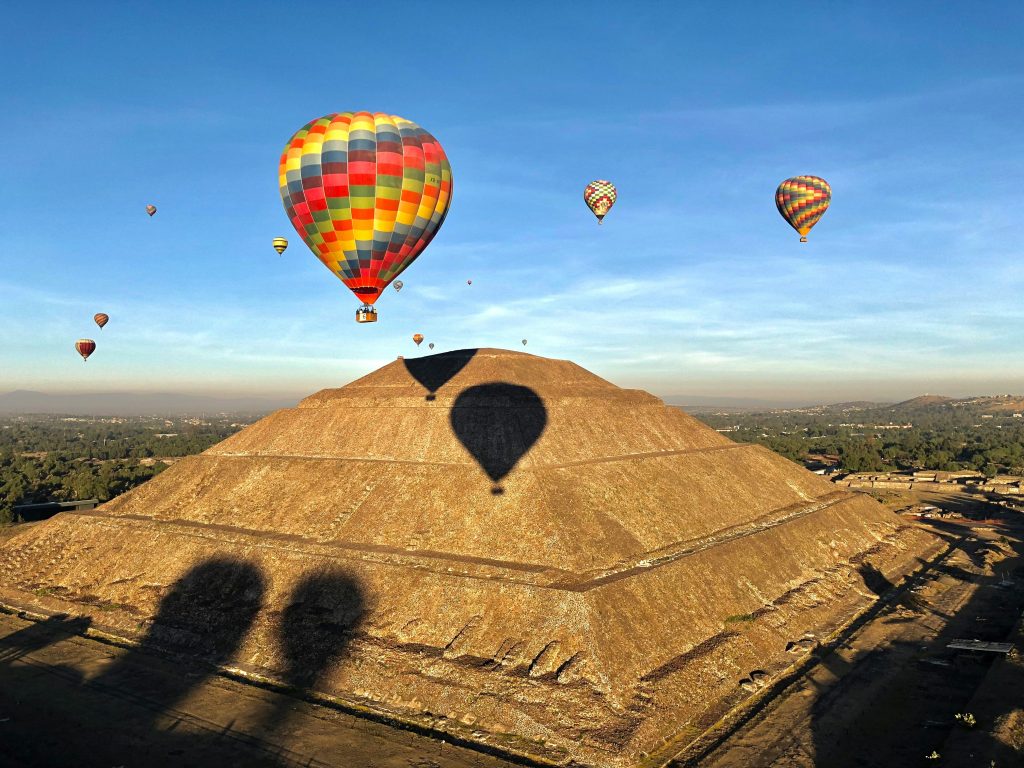
This is not “one pyramid,” but an entire ancient megacity with a well-thought-out layout: the long Avenue of the Dead, major temple platforms, and neighborhoods where artisans and priests once lived. Even today, it’s still not fully clear who exactly founded the city — and that mystery only adds to the effect.
Location: State of Mexico, ~1 hour from Mexico City.
How to visit: on your own (bus/taxi) or on a half-day/full-day tour.
Time to allow: half a day (at least 2–3 hours on site).
Best time: at opening on weekdays — less heat and fewer tour groups.
Tickets/donation: paid entry (archaeological zone).
- Templo Mayor (the main Aztec temple)
This place literally shows the “layers” of Mexico City’s history: the Aztec center of Tenochtitlan was destroyed after the conquest, and a colonial city grew on top of it. Today you can see the real remains of the Aztecs’ main temple and understand why the capital stands exactly here — in the very heart of the former empire.
Location: Historic Center of Mexico City (near the Zócalo).
How to visit: independently; easy to combine with the Metropolitan Cathedral and a walk around the center.
Time to allow: 1-2 hours.
Best time: weekday morning.
Tickets/donation: paid (museum/excavations).
- Basilica of Our Lady of Guadalupe

This is not just a “beautiful church,” but a living pilgrimage site that people come to from all over the country. Even if you’re not religious, you feel the scale here: families arrive together, bring flowers and candles, and often come with very personal requests and gratitude.
Location: Mexico City.
How to visit: independently (metro/taxi).
Time to allow: 1-2 hours (or longer if you want to take it slow).
Best time: weekdays, morning; on religious dates the crowds are huge.
Tickets/donation: entry is usually free; donations are appropriate.
- Cuicuilco
A rare format for Mexico — a circular pyramid — and the feeling that you’re seeing a “very early version” of the region’s temple architecture. The site is often underestimated because it’s not as “grand” as Teotihuacan, but it’s perfect if you want a short visit without crowds and long trips.
Location: southern Mexico City.
How to visit: independently.
Time to allow: 30-60 minutes.
Best time: morning/evening.
Tickets/donation: usually paid.
Puebla
- Cholula (Great Pyramid / Tlachihualtepetl)
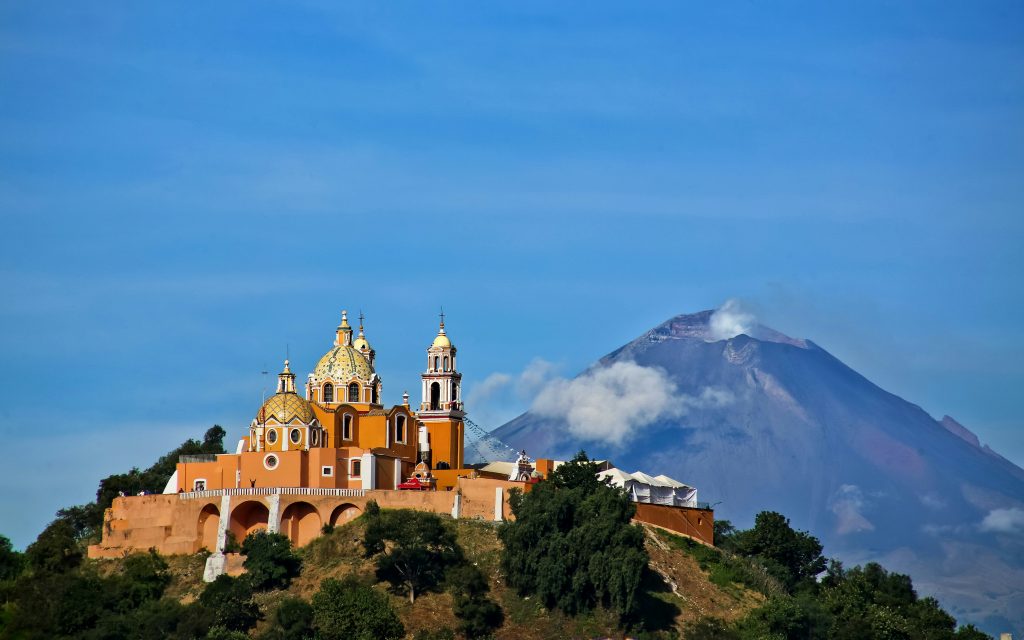
One of the main “highlights” here is a pyramid that looks like a hill, because over centuries it became overgrown and merged with the landscape. And on top of it sits a colonial church.
Location: Cholula, near Puebla (easy as a trip from Mexico City).
How to visit: independently or with a tour.
Time to allow: 1-2 hours.
Best time: morning/weekdays; sunset is beautiful, but there are more people.
Tickets/donation: some areas are paid (tunnels/museum), the rest is more open.
Yucatán
- Chichén Itzá (El Castillo / Temple of Kukulcán)
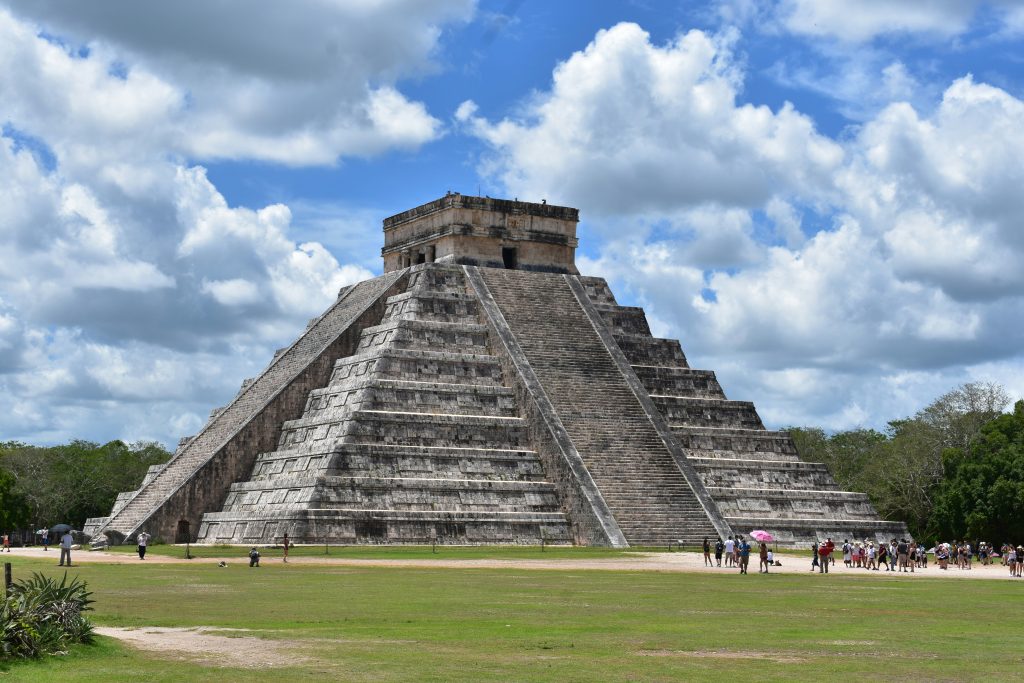
This is that “Maya symbol” that even people who’ve never been into history recognize. The complex is large and feels like a “ritual city”: it’s not just the pyramids, but the overall composition of the space — where ceremonies, gatherings, and games took place. One downside: popularity, so the secret to success is to come as early as possible.
Location: between Mérida and Cancún (convenient from Valladolid).
How to visit: independently or with a tour.
Time to allow: 2-3 hours (with travel it often becomes half a day).
Best time: at opening.
Tickets/donation: paid.
- Uxmal
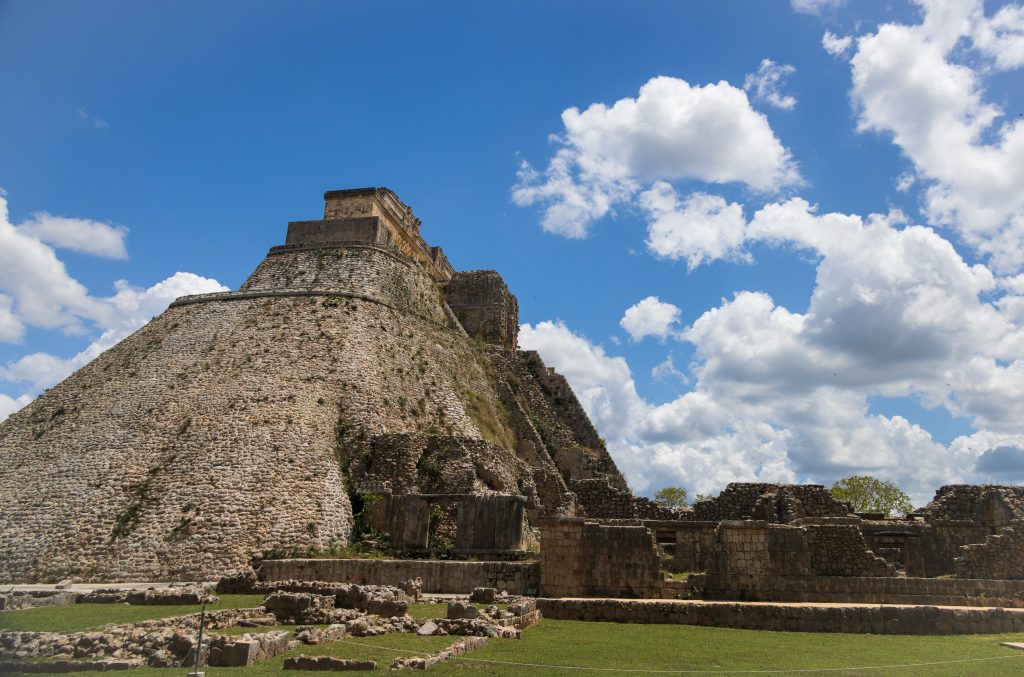
One of the most “harmonious” and photogenic Maya complexes: many people note that the architecture here looks more elegant than at the most popular temples. Plus there are often noticeably fewer crowds — so the impression feels calmer.
Location: near Mérida (Yucatán).
How to visit: by car / on a day tour.
Time to allow: 2-3 hours.
Best time: morning or closer to evening.
Tickets/donation: paid.
Chiapas
- Palenque
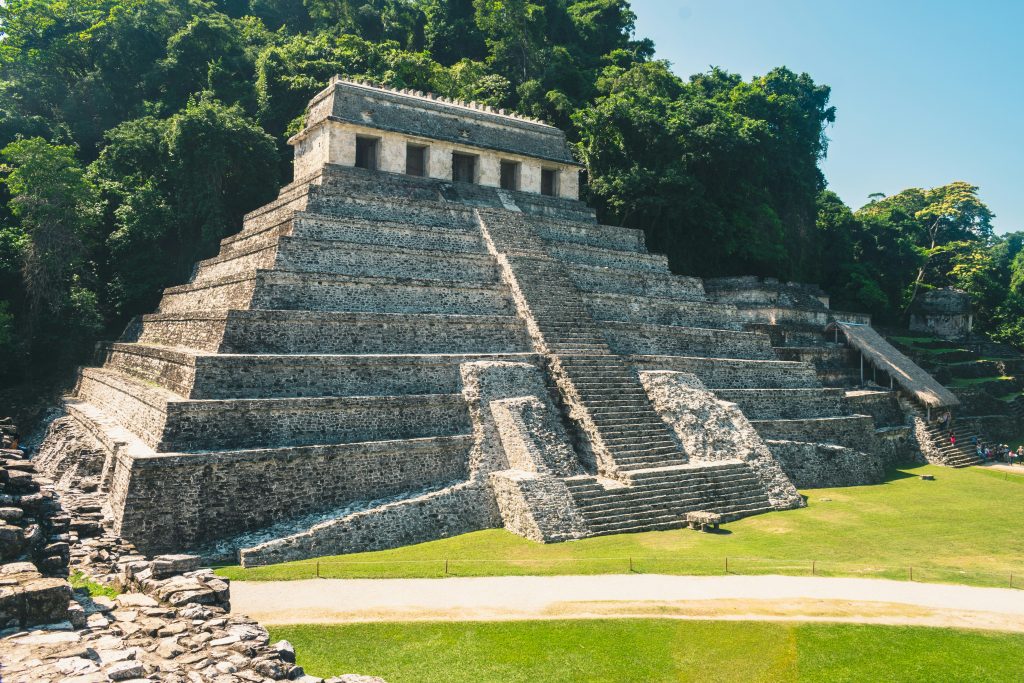
The “temple in nature” effect is very strong here: ruins stand among greenery, you hear birds, the air is humid — and because of that the stone feels “alive.” Palenque is great for those who don’t just want to “tick a box,” but actually catch the mood of an ancient place — especially in the morning, before the groups arrive.
Location: Chiapas, near the town of Palenque.
How to visit: independently (taxi/tour from town) or as part of a Chiapas route.
Time to allow: half a day.
Best time: morning; after rain it can be slippery.
Tickets/donation: paid.
- Toniná
This complex feels more “severe” and powerful: it’s tall, stepped, and while you’re climbing you really feel the scale. There are often fewer tourists than in Palenque, so Toniná is a great choice if you want a “strong place” without the feeling of a mass attraction.
Location: Chiapas, near Ocosingo.
How to visit: more often by car / tour.
Time to allow: 1-2 hours.
Best time: weekday mornings.
Tickets/donation: paid.
Oaxaca
- Monte Albán
This is not “jungle” and not a “Maya postcard,” but a temple-city up high, where the main thing is space and views. You walk across the plateau, and all around is the panorama of the Oaxaca Valley — it feels very expansive and cinematic, especially in soft morning light.
Location: above Oaxaca City.
How to visit: taxi/shuttle or a half-day tour.
Time to allow: 2-3 hours.
Best time: morning or closer to sunset.
Tickets/donation: paid.
- Mitla
Mitla is valued for its details: geometric mosaics, ornaments, and “stone graphics” that look almost modern. It’s a different sense of antiquity — not the “wow-giant pyramids” effect, but fine workmanship and patterns you want to look at up close.
Location: a valley near Oaxaca.
How to visit: independently (shared vans/taxi) or with a tour.
Time to allow: 1-2 hours.
Best time: mornings/weekdays.
Tickets/donation: usually paid.
Gulf Coast: Veracruz
- El Tajín
The famous Pyramid of the Niches is one of Mexico’s most recognizable pyramids. El Tajín often appeals to people who want to see something “less obvious”: the architecture here is truly different, and on the site it’s usually easier to find a calm rhythm without big crowds.
Location: Veracruz state, Papantla area.
How to visit: easiest by car / with a tour; makes sense if you’re going from Mexico City toward the Gulf.
Time to allow: 2-3 hours.
Best time: morning.
Tickets/donation: paid.
Suggested temple itineraries in Mexico
Option A: 3-4 days
Region: Mexico City + nearby
Itinerary:
- Day 1: Templo Mayor (central Mexico City)
- Day 2: Basilica of Guadalupe (Mexico City)
- Day 3: Teotihuacan (main day trip, best early in the morning)
- Day 4 (if you have it): Cuicuilco (quick visit, no long travel)
Base: Mexico City (everything is easy to do from one point).
Transfers: 1 major trip out of the city (Teotihuacan); everything else is within Mexico City.
Option B: 7-10 days
Regions: Mexico City → Oaxaca → Yucatán
Itinerary:
- Mexico City (2-3 days): Templo Mayor → Basilica of Guadalupe → Teotihuacan
- Oaxaca (2-3 days): Monte Albán → Mitla
- Yucatán (2-3 days): Chichén Itzá → Uxmal
Base: Mexico City / Oaxaca City / Mérida or Valladolid.
Transfers: 2-3 major moves between regions (between bases).
Temple etiquette
Dress code
For active churches and basilicas, it’s best to choose clothing that covers your shoulders and knees — this is the most universal and respectful option. In the heat, a light shirt or shawl you can throw on at the entrance is a real lifesaver. At archaeological sites there are usually no strict rules, but it’s still worth avoiding an openly “beachy” look, especially if rituals are taking place nearby or locals come not as tourists.
How to behave inside
Inside temples, keep a calm tone and speak more quietly; don’t stand directly in front of people who are praying and don’t block passageways. If a service is happening, it’s better to watch from the side and not walk between the rows — that way you won’t disturb someone’s prayer or draw unnecessary attention. At archaeological sites, it’s important not to touch carvings and stonework and not to enter closed-off areas: sometimes it feels like “you can,” but it damages the site, and it can also end in a warning or a fine.
Photo/video
At ruins and archaeological zones, photography is most often allowed, but sometimes there are separate restrictions and rules for professional shooting, tripods, or drones — it’s best to follow the signs at the entrance. In active temples, they usually ask you to film and photograph carefully: no flash, no loud videos, and no “hunting for the shot” right by the altar; in some places photography is not allowed at all. If you want to photograph people, especially pilgrims or participants in rituals, it’s more respectful to do it unobtrusively or ask permission — in Mexico, that kind of respect is usually received very well.
If you’re visiting with kids
The easiest way to make the visit comfortable is to come in the morning: it’s cooler, there are fewer people, and kids handle walks more easily. At ruins, agree on a simple rule about steps and edges in advance — the stone can be slippery, and the height is very real. And be sure to bring water and a small snack: there may not be decent food on site, and getting back to a café can take time.
Practical tips for visiting temples in Mexico
How to avoid crowds
The most effective rule is to come at opening time, or at least in the first half of the day: there are fewer people, the light is softer, and the heat hasn’t started to “press down” yet. In the most popular places like Teotihuacan and Chichén Itzá, the difference between 8-9 a.m. and 11 a.m.-12 p.m. is almost physical: later it gets both denser and louder. If you have a choice, schedule the key sites on weekdays, and leave weekends for city walks or museums. During peak holiday seasons and festivals, it’s best to accept in advance that “perfect quiet” will be rare, and simply put the top spots at the earliest possible time.
Weather and shoes (heat, rain, slippery steps)
In Mexico it’s easy to underestimate the combination of sun and stone: on the open plazas of ruins there’s almost no shade, so water, a hat, and sunscreen are your basic kit. Shoes are best with a proper sole: ancient steps and stone slabs can be slippery (especially after rain or in humid regions like Chiapas), and on plateaus and large sites you’ll be walking a lot on uneven ground. If you’re traveling in the rainy season, a light rain jacket is useful: an umbrella often gets in the way on stairs and in crowds, and rain can start suddenly — and end just as suddenly.
Accessibility (stairs, long walks)
Many “temple-pyramids” mean stairs and long walks in the sun, so if you want to minimize strain, allow more time and take breaks. Some places (especially archaeological sites) can be not very friendly for strollers and people with limited mobility because of uneven terrain and steps, so it’s better to expect a “slow walk around the grounds” format rather than a quick “dash from point to point.” In city shrines (for example, in Mexico City) it’s usually easier: approaches and paths are more predictable, there are benches, and the infrastructure is clearer.
Typical tourist “scams” near popular sites
Near famous temples you usually see the same thing: a “great-value tour right now,” a “mandatory guide,” “the best photo spots for an extra fee,” or pushy sellers of “amulets” and “cleansings.” The best strategy is simple: know in advance how you’re getting there and roughly what it should cost, and calmly ignore everything else. If someone tells you something is “required” (especially in the style of “you can’t enter / you won’t pass without this”), it’s almost always unofficial. For souvenir shopping, a good rule is: check prices with a few vendors first, don’t pull out your wallet in a crowd, and don’t accept a “gift” that turns into a demand for payment a minute later.
Final Thoughts
Temples in Mexico are one of those rare cases where a cultural program doesn’t feel like a box to tick. It’s easy to sense that history isn’t sitting behind glass here: ancient ceremonial centers still hold their scale and silence, while active shrines live in a real, present rhythm — with prayers, candles, and the everyday routines of locals. That’s why the best approach for a first trip is not to try to see everything, but to build an itinerary that feels comfortable and stays in your memory not as exhaustion, but as a sense of place. This way you’ll bring home not only photos of pyramids, but the feeling of Mexico — a country where different traditions and eras don’t compete with each other, but coexist side by side in a surprisingly natural way.